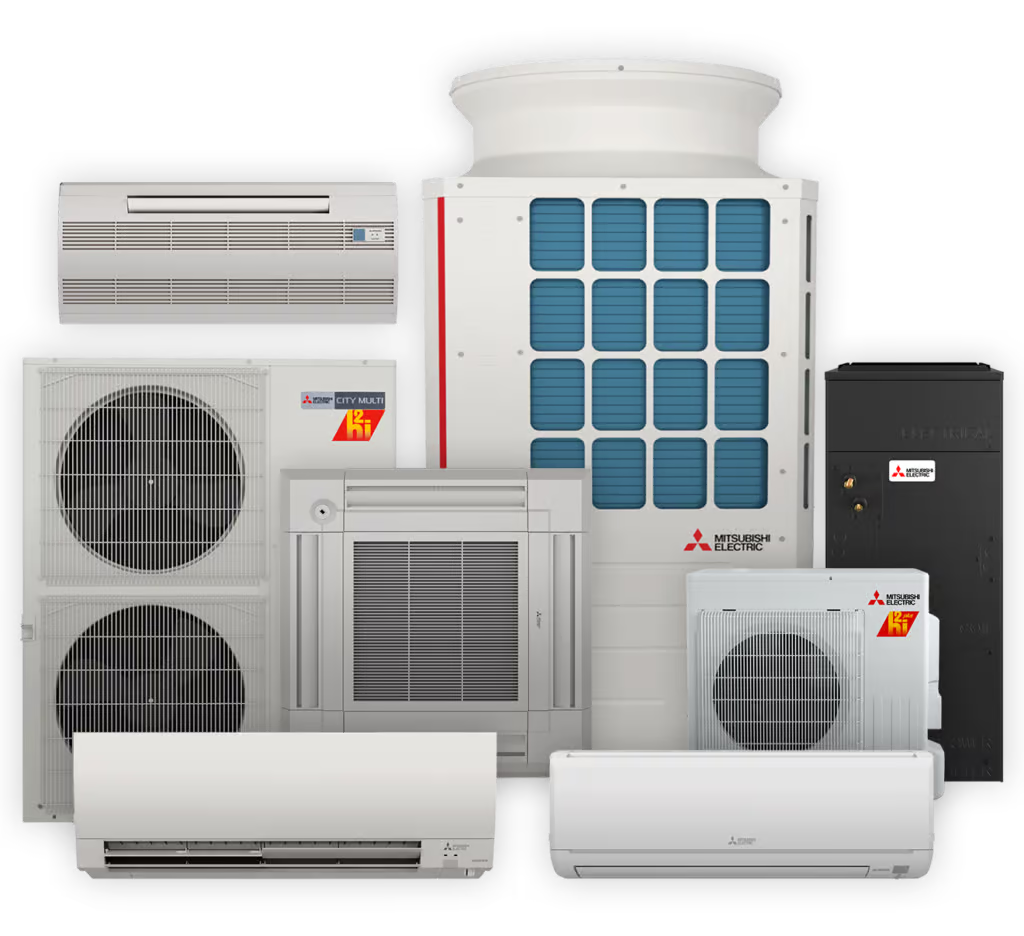
Variable-speed and two-stage models provide ultra-quiet operation compared to models with single-stage compressors. In addition, heat pumps that include sound blankets can further reduce sound levels.
Heat Pumps use far less energy than traditional Central Air Systems with a furnace & air conditioner. Heat pumps can achieve up to 3 to 4 times the efficiency of a traditional gas furnace so they can help reduce your carbon footprint.
Systems can be customized to be multi-zone, or modified to be dual functional. This means you could be heating one room, but cooling another simultaneously. Each living space can be fine tuned for what it’s used for.
Proper system design, quality materials & expert installation are needed to achieve maximum energy & cost savings. We’ll make sure your system is built to last, meet your needs, & bring you years of home comfort.
We’ll assess your current system, space available & give you advice on a new system suited to your specific needs. Whether it’s one uncomfortable room, a renovation, or you’re building a new home, we’ll help you find the right solution. We can make your system more energy efficient & find the best way to combine it with your existing equipment. You use the rooms of your home in different ways, & we can fine tune each one to meet your needs. We want you to be completely satisfied with your new heat pump system.
A heat pump is part of a heating and cooling system and is installed outside your home. Like an air conditioner, it can cool your home, but it’s also capable of providing heat. In cooler months, a heat pump pulls heat from the cold outdoor air and transfers it indoors, and in warmer months, it pulls heat out of indoor air to cool your home. They are powered by electricity and transfer heat using refrigerant to provide comfort all year round. Because they handle both cooling and heating, homeowners may not need to install separate systems to heat their homes. In colder climates, an electric heat strip can be added to the indoor fan coil for additional capabilities. Heat pumps do not burn fossil fuel like furnaces do, making them more environmentally friendly.

Heat pumps do not create heat. They redistribute heat from the air or ground and use a refrigerant that circulates between the indoor fan coil (air handler) unit and the outdoor compressor to transfer the heat. In cooling mode, a heat pump absorbs heat inside your home and releases it outdoors. In heating mode, the heat pump absorbs heat from the ground or outside air (even cold air) and releases it indoors.
The two most common types of heat pumps are air-source and ground-source. Air-source heat pumps transfer heat between indoor air and outdoor air, and are more popular for residential heating and cooling. Ground-source heat pumps, sometimes called geothermal heat pumps, transfer heat between the air inside your home and the ground outside. These are more expensive to install but are typically more efficient and have a lower operating cost due to the consistency of the ground temperature throughout the year.
Heat pumps are more common in milder climates, where the temperature does not typically drop below freezing. In colder regions, they can also be combined with furnaces for energy-efficient heating on all but the coldest days. When the temperature outside drops too low for the heat pump to operate effectively, the system will instead use the furnace to generate heat. This kind of system is often called a dual fuel system – it is very energy efficient and cost effective.
Major components of a heat pump system:
Outdoor unit with a coil that acts as a condenser in cooling mode and an evaporator in heating mode Indoor unit that contains a coil (just like the outdoor unit) and a fan to move the air through your home Refrigerant that absorbs and releases the heat as it circulates through the system Compressor that pressurizes the refrigerant Reversing valve that changes the direction of the refrigerant in the system, to enable the shift between heating and cooling Expansion valve that regulates the flow of refrigerant through the system.